Managed IT services, maintenance, online software, integration, leased equipment: the SME and its IT provider
Information technology lawyer Paris: the SME and its IT provider, from breakdown to contract exit.
Server down, no backups, ransomware, software delivered late, disputed invoices or a blocked change of managed service provider: the client SME must first read what the contract promised, then prove the gap. As an information technology lawyer in Paris, the firm examines the provider's commitments, the client's share of responsibility and the appropriate remedy.
After an incident, do not reinstall anything and do not terminate before you have preserved the logs, backup reports, tickets and correspondence: these traces often disappear when the system is put back into service.
SME client of an IT provider · Paris
Get a first analysis
Send the quotation or contract, the general terms, the invoices, the incident tickets and the correspondence with the provider: the firm checks what was promised and what can be claimed.
24 à 48 h
first legal
review

Kohen Avocats, Paris 17
SMEs and IT providers: what the court looks at first
Digital law · Paris 17th
What an information technology lawyer in Paris does
- Paris Bar
- Digital law
- IT contracts and disputes
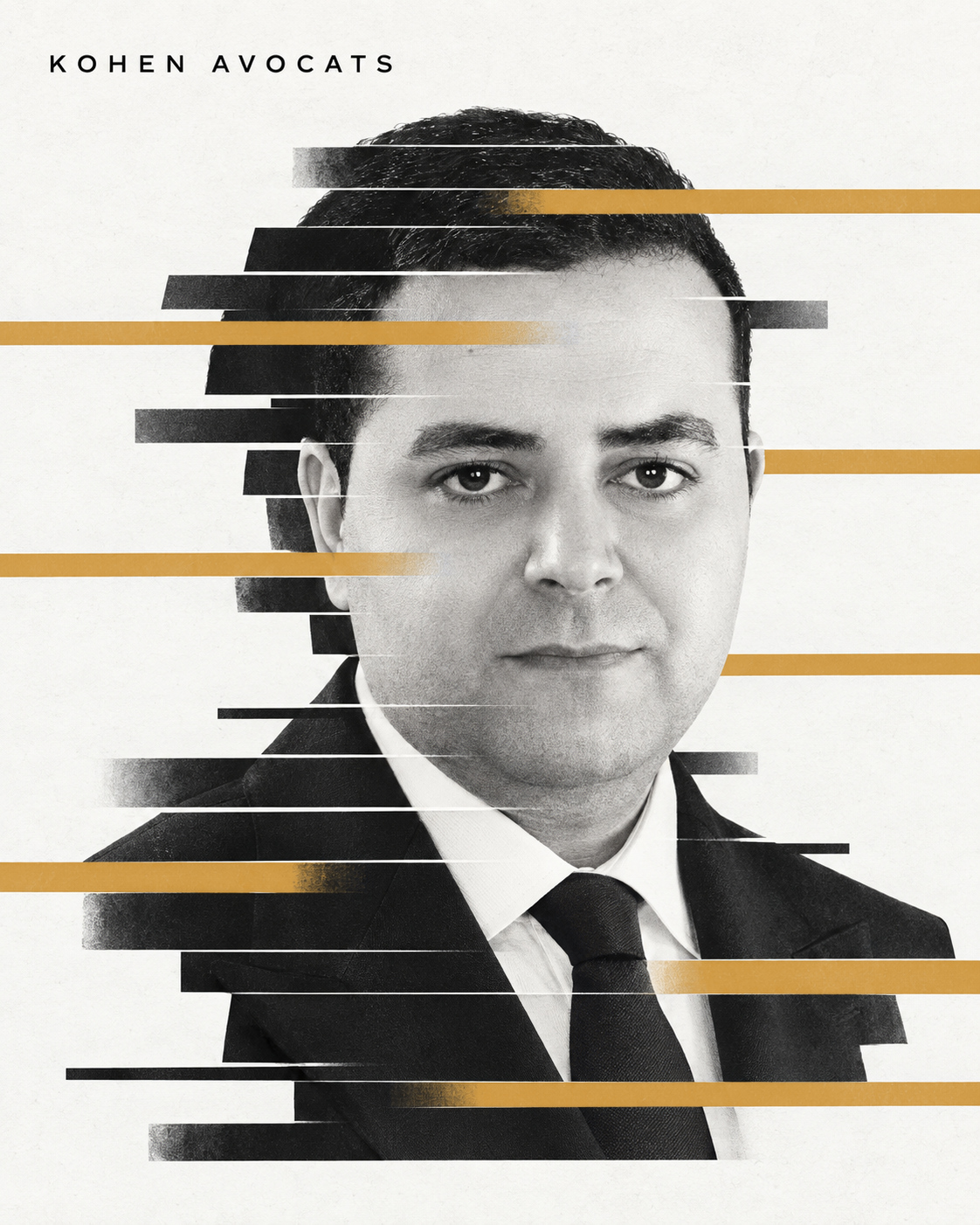
Reda Kohen, lawyer (avocat) at the Paris Bar, can act for the client company in its dealings with a managed service provider, an integrator, an online software publisher or a maintenance provider.
An SME often entrusts its entire information system to a single provider, on the strength of a quotation and general terms it has not negotiated. The day the server goes down or the data disappears, the question becomes simple: what did the provider promise, and what did it do?
The firm examines the contractual documents, the professional's duty to advise, the cooperation expected of the client and the clauses that limit compensation. It then distinguishes what calls for negotiation, for an urgent measure before the urgent applications judge (juge des référés), or for a liability claim.
Send what you have, even if incomplete: the firm will prioritise and complete the file with you. In an emergency, call +33 6 46 60 58 22.
Official profile in the directory of French lawyers (CNB)Firm at 11 rue Margueritte, 75017 Paris
What was promised
The quotation, purchase order, general terms, service level annex and preliminary correspondence set the real extent of the provider's obligations.
The client's share
The way needs were expressed, the response to the provider's requests and the reporting of incidents all weigh on how responsibility is shared.
The company's data
Backup, security, access codes and return of data at the end of the contract determine business continuity and the exit from the provider.
The rules
The rules governing the relationship with the provider
Five rules to check in the relationship with the provider.
- Where equipment is leased from a financing company and maintained by another provider, the contracts may form a single whole. Article 1186 of the French Civil Code (Code civil) makes contracts linked to the one that disappears lapse, if the other party knew of the overall operation. The Court of Cassation holds that, because “concomitant or successive contracts forming part of an operation that includes a financial lease are interdependent” (our translation), their fates remain linked (Cass. com., 10 January 2024, No. 22-20.466, published).
- The professional provider must find out about its client's needs and warn it of the risks. The Reims Court of Appeal recalls that “the duty to advise inherent in any IT supply contract requires the seller to find out about the buyer's needs and to inform the buyer whether the product offered is suited to its intended use” (our translation) (CA Reims, ch. civ. et com., 28 April 2026, No. 24/01502). The pre-contractual duty of disclosure under Article 1112-1 of the Civil Code remains limited to information that is decisive.
- The client is not passive. In the same case, the court held that “it was incontestably for MISA to define its needs better and to draw up a specification before the contract was concluded” (our translation), and shared liability equally (CA Reims, 28 April 2026). A client who terminates without an established serious breach may even see the contract terminated at its sole fault (CA Paris, pôle 5 ch. 11, 22 November 2024, No. 21/08604).
- Liability caps are valid between professionals, unless they deprive the essential obligation of its substance (Article 1170 of the Civil Code) or in the case of gross or wilful misconduct (Article 1231-3). For a hosting provider bound to 99.5% availability, the Versailles Court of Appeal held that “there is therefore no reason to deem the clause limiting liability in the general terms unwritten, since it must take full effect” (our translation) (CA Versailles, 12e ch., 19 May 2022, No. 20/05106).
- Where a party fails to perform, Article 1217 of the Civil Code gives the client several responses: refusing to pay, reducing the price, requiring performance, terminating the contract and claiming damages. Each has its own conditions. Suspending payment requires a sufficiently serious failure to perform (Article 1219), and termination by notice requires prior formal notice, except in urgent cases (Article 1226).
The provider's contract is not always the one the SME believes it signed: general terms accepted online, technical annexes and successive quotations combine. Reading them in full comes before any claim.
Your documents
The documents to gather according to the stage
Proof of an IT breach is built from dated documents and preserved technical traces.
Situation A
You are signing, renewing or changing provider
- The quotation, purchase order, general terms and service level annex proposed
- A written description of your needs, however brief, and the provider's replies
- A list of the data, administrator access and licences to be recovered at the end of the contract
- The equipment lease and the maintenance contract, if they are separate
Situation B
An incident or a disagreement is under way
- Tickets, emails and intervention reports, in chronological order
- Logs, backup reports, security alerts and the report of any expert
- Invoices paid or disputed, reminders and formal notices exchanged
- Figures quantifying the interruption of business: hours lost, missed orders, restoration costs
Ask the provider in writing to preserve the logs and backups from the moment of the incident, and have the state of the system recorded before any reinstallation or migration.
The firm also handles:
- IT contracts
- IT litigation
- Cybersecurity
- Personal data
The method
How the firm handles the case
Read the contract, establish the facts, then choose between negotiation, urgent application and a full action on the merits.
Step 1
Reconstructing the contractual framework
The firm gathers the quotations, general terms, annexes and correspondence, then identifies the obligations actually promised, the exclusions and the liability caps that really apply.
Step 2
Establishing the technical chronology
Tickets, logs and reports make it possible to date the incident, identify who had control of the system and measure any share of responsibility on the client's side.
Step 3
Protecting business continuity
Where the provider withholds access or data, an urgent application may seek the handing over of the access codes and the return of the data before the urgent applications judge.
Step 4
Claiming, negotiating or taking action
A reasoned formal notice, a price reduction, termination of the contract or a liability action: the route chosen depends on the evidence available and the seriousness of the breach.
An IT dispute is rarely won on an impression of incompetence. It is won on the demonstrated gap between the written commitment and the service actually provided.
The timetable
The timeline of a dispute with the provider
From the incident to the exit from the contract or the court's decision.
Incident
The same day. Note the time and the workstations and services affected; open a written ticket and ask for the traces to be preserved.
Statement of commitments
Gather the quotation, the general terms, the service level annex and the correspondence that preceded signature.
Formal notice
Require performance within a reasonable time, stating if necessary that, failing this, the contract may be terminated.
Urgent measures
Where access or data is withheld, the urgent applications judge may order the handing over of the codes and reversibility.
Expert assessment
If the cause is disputed, an investigative measure may be requested before any proceedings, where there is a legitimate reason and the envisaged action is not manifestly doomed to fail.
Exit or judgment
Settlement agreement, termination, price reduction or an order to pay damages, depending on the evidence and the applicable clauses.
The checks
What the firm checks before any claim
A claim against an IT provider rests on documents, not on a feeling.
- Enforceable contractual documents: signed quotation, accepted general terms, technical annexes and successive amendments.
- Nature of the obligation at issue: backup, security, availability, delivery deadline or mere assistance.
- The client's role: expression of needs, replies to requests, written reports and payment of invoices.
- Sensitive clauses: liability cap, exclusions, term of commitment, termination fee and the fate of the data.
- Quantifiable loss: interruption of business, reconstitution of data, restoration costs, each backed by a document.
Summary
Situation, evidence, first decision
Six frequent situations for a client company, and the priority that emerges from each.
Situation
Ransomware on a set of equipment maintained by a provider
Decisive evidence: Incident report, server configuration, updates, firewall and the scope entrusted to the provider.
Timing: Preserve the traces before the system is rebuilt.
Useful action: Look for a breach of the duty to advise or of security obligations, then for the client's share of responsibility.
Situation
No backups at the time of the breakdown
Decisive evidence: Maintenance contract, backup reports, and who received and checked them.
Timing: Freeze the reports and the state of the storage media as soon as the problem is discovered.
Useful action: Claim compensation for the cost of reconstitution and the interruption of business.
Situation
Software package or website delivered late or incomplete
Decisive evidence: Schedule, project steering minutes, acceptance test records and written requests left unanswered.
Timing: Do not sign an unqualified acceptance for a non-conforming deliverable.
Useful action: Formal notice, then price reduction or termination depending on the seriousness of the breach.
Situation
Leased equipment whose maintenance has ceased
Decisive evidence: Lease agreement, maintenance contract, delivery note and material linking the contracts to a single operation.
Timing: Act before the lessor demands the termination fee.
Useful action: Rely on the interdependence of the contracts and the lapse of the lease.
Situation
Change of managed service provider blocked
Decisive evidence: List of administrator access, hosted data, requests for return and the provider's refusals.
Timing: Plan the return of data before the contract end date.
Useful action: Formal notice, then an urgent application for the handing over of the codes and reversibility.
Situation
Provider in judicial reorganisation or liquidation
Decisive evidence: Judgment opening the proceedings, contracts in progress, pre-existing debts and material on the continuity of the service.
Timing: Ask the administrator or liquidator whether the contract will continue.
Useful action: Formal notice to take a position, and filing of the claim.
Frequently asked questions
Your questions: SMEs and IT providers
When does an SME consult a lawyer about its IT provider?
Most often after an event that interrupts business: a server out of service, ransomware, data loss, software delivered unusable or a managed service provider that refuses to hand over access. Other cases begin earlier, when signing a quotation, renewing a maintenance contract or changing provider. In every case, the first question concerns the documents: what do the quotation, the general terms, the service level annex and the preliminary correspondence contain? The second concerns the facts: who administered the system, who received the alerts, who was responsible for backups? The remedies for non-performance are listed in Article 1217 of the French Civil Code (Code civil), but the choice among them depends on the evidence available and the seriousness of the breach. The firm can examine these elements, draft a formal notice, negotiate an orderly exit or bring the matter before the court. Drafting and negotiating clauses are covered on the page on IT contracts, and the conduct of proceedings after a failed project on the page on IT litigation.
Was the provider required to warn us of the risks of the solution it installed?
Yes, to an extent that depends on the client's own competence. The professional must find out about the company's needs and inform it whether the proposed solution is suitable. The Reims Court of Appeal held that it was for the provider, “if it considered itself insufficiently informed, to refuse to commit, to enter reservations or to invite the client to specify its needs” (our translation) (CA Reims, 28 April 2026, No. 24/01502). In that case, an SME without in-depth IT skills had suffered a ransomware attack after an installation carried out by the provider; the court found a breach of the duty to advise. It nevertheless left half of the loss with the client, for lack of a specification and of sufficient information given to the provider. The pre-contractual duty of disclosure under Article 1112-1 of the Civil Code also has its limits: the Court of Cassation holds that “the pre-contractual duty of disclosure covers only information that has a direct and necessary link with the content of the contract or the capacity of the parties, and whose importance is decisive for the other party's consent” (our translation) (Cass. com., 14 May 2025, No. 23-17.948, published). It is therefore necessary to show what information was missing and why it would have changed the decision.
If there is no specification, does the client company lose all remedies?
No, but the absence of a specification changes the discussion. The court then looks at whether the provider itself analysed the needs and supported its lay client. In a case concerning enterprise management software, the Paris Court of Appeal noted that “While the absence of a specification cannot be held against Avenir Déconstruction, a layperson” (our translation), the analysis days provided for and the exchanges showed that the provider had performed its obligation (CA Paris, pôle 5 ch. 11, 22 November 2024, No. 21/08604). The outcome went against the client: no serious breach having been shown, its termination was held wrongful and the contract was terminated at its sole fault, with payment of the sums due. Conversely, the Reims Court of Appeal found liable a provider that had not asked its client about its security needs, while sharing the loss equally (CA Reims, 28 April 2026). These decisions show that a case is decided on the real exchanges: the provider's requests, the client's replies, meeting minutes and alerts raised in writing. The firm reconstructs this thread before assessing the SME's position.
After a ransomware attack, must the maintenance provider compensate the company?
Its liability depends on the scope entrusted to it. If the contract made it responsible for administering and securing the system, a flaw attributable to its intervention may engage its contractual liability under Article 1231-1 of the Civil Code. The Paris economic activities court (tribunal des activités économiques) thus ordered a provider that, according to the judgment, “was responsible for setting up and maintaining the IT systems and was required to ensure their security” (our translation), to pay damages after an intrusion made possible by an overlooked filter (TAE Paris, ch. 1-3, 8 October 2025, No. 2024005541). This first-instance decision remains tied to its facts, notably the provider's written admission. Where the client itself contributed to the loss, for example by not expressing its security needs, liability may be shared, as the Reims Court of Appeal did. If the provider processes personal data on the company's behalf, it is a processor within the meaning of Regulation (EU) 2016/679 and must in particular comply with the security obligations in Articles 28 and 32. The firm begins by establishing the scope entrusted, the timeline of the attack and the technical report available.
The backups had stopped working: who bears the loss of the data?
Whoever was actually responsible for them, which the contract and the parties' practice allow to be established. A clause giving the client the daily checking of backups does not settle everything. The La Roche-sur-Yon commercial court held such a clause unenforceable, as it appeared in a draft contract that was never signed, and found that practice confirmed that the provider was responsible, noting that the client's staff “were neither competent, nor trained, nor involved in the management of backups” (our translation); it held the provider fully liable (T. com. La Roche-sur-Yon, 14 January 2025, No. 2023005634). The technician had disconnected the backups for tests and was the only one to receive the daily reports. A separate case concerns the erasure of backups on termination in 2023. The Paris Court of Appeal held that the action of a company whose data had been deleted on termination was manifestly doomed to fail, clear clauses having informed it of this deletion, noting that “The obligation to return intact files referred to in this article binds Nemoxia during the performance of the contract” (our translation) (CA Paris, pôle 1 ch. 2, 9 April 2026, No. 25/11299). This outcome does not prejudge the data-retrieval obligations that now apply to services falling within the scope of Regulation (EU) 2023/2854. The firm therefore reads the backup and termination clauses before a contract is ended.
Can we stop paying the invoices of a provider that is not performing its obligations?
It is possible, but risky if the non-performance cannot be shown. Article 1219 of the Civil Code allows a party to refuse to perform its own obligation where the other party fails to perform theirs and the failure is sufficiently serious. The burden of proving that seriousness lies on the party that suspends payment. The Rennes Court of Appeal recalled this to a catering business that complained of malfunctions by its till and software supplier: it had signed the last acceptance record without reservation and “shows no detailed request for intervention, as provided for in the contract”; the court concluded that “Consequently, the defence of non-performance is not justified” (our translation) (CA Rennes, 3e ch. com., 9 September 2025, No. 24/03931). The client was ordered to pay the invoices with interest. Another route exists for a poorly performed service: Article 1223 allows, after formal notice and if the price has not yet been paid in full, a proportionate price reduction to be notified as soon as possible; after payment, failing agreement, the reduction is sought from the court. The firm first checks the written reports, the unanswered tickets and the acceptance records signed, then chooses between suspension, reduction or termination.
How can we end the contract without waiting for a court decision?
By termination by notice, which requires a sufficiently serious failure to perform (Article 1224 of the Civil Code). Article 1226 sets out the procedure: prior formal notice, except in urgent cases, stating that failing performance within a reasonable time the contract may be terminated; then notification of the termination and of its reasons. The provider may challenge it before the court, and it is then for the client to prove the seriousness of the breach. For contracts concluded before 1 October 2016, the Court of Cassation also accepts that a party may end the contract at its own risk because of the other's serious conduct, and specifies that “In the event of a dispute, it is for the party that ended the contract to prove such conduct” (our translation) (Cass. com., 22 November 2023, No. 22-16.514, published). The risk is real: an ill-founded termination turns against the client, as in the case decided by the Paris Court of Appeal on 22 November 2024, where the contract was terminated at the sole fault of the company. The firm therefore prepares the formal notice, preserves proof that the breach continues and arranges the resumption of the service before notification.
Can the liability cap in the contract be set aside?
In specific cases, which the courts apply strictly. Article 1231-3 of the Civil Code limits damages to foreseeable loss, except in the case of gross or wilful misconduct, and Article 1170 deems unwritten any clause that deprives the essential obligation of its substance. The Paris Court of Appeal recalls that “Only a clause limiting compensation that contradicts the scope of the essential obligation undertaken by the debtor is deemed unwritten” and that “clauses limiting liability or compensation may be set aside only in the case of fraud or gross misconduct” (our translation) (CA Paris, pôle 5 ch. 11, 1 December 2023, No. 21/06139). In that case, the compensation of a company that was a client of an operator was reduced to the amount invoiced over six months. For a standard-form contract, Article 1171 also allows a non-negotiable clause creating a significant imbalance to be set aside. Between commercial partners, Article L. 442-1 of the Commercial Code (Code de commerce) penalises submitting or attempting to submit the other party to obligations creating a significant imbalance, and the Court of Cassation specifies that “The assessment of a significant imbalance requires a concrete analysis of the overall economy of the contract” (our translation) (Cass. com., 26 February 2025, No. 23-20.225, published). The best protection remains negotiating the cap before signature.
The equipment is leased from a financing company: what happens to the rent if maintenance ceases?
An SME that leases its copiers, servers or workstations from a financing company, while another provider supplies the maintenance or services, is often caught between two contracts. Article 1186 of the Civil Code provides that, where several contracts are necessary for a single operation, the disappearance of one makes those that depended on it lapse, if the other party knew of the overall operation. The Court of Cassation draws a clear rule from this for operations including a financial lease: “In contracts forming an operation that includes a financial lease, clauses that are irreconcilable with this interdependence are deemed unwritten” (our translation) (Cass. com., 10 January 2024, No. 22-20.466, published). In that case, the lessor had obtained termination at the tenant's fault by relying on a clause requiring the tenant to find a new maintenance provider alone; the judgment was quashed in the tenant's favour. The outcome nevertheless depends on proof that the contracts belonged to the same operation; in the configuration decided, the Court inferred from the contract's inclusion in an operation comprising a financial lease that the lessor necessarily knew of the overall operation. The firm gathers the purchase orders, the delivery records and the correspondence between the supplier and the lessor before answering a claim for a termination fee.
How can we recover our data and access when changing managed service provider or online software?
First through the contract, then through the court if the provider blocks the transition. The urgent applications judge may prescribe the measures needed to put an end to a manifestly unlawful disturbance, even where there is a serious dispute, and order performance of an obligation to act whose existence is not seriously contestable (Article 873 of the Code of Civil Procedure). The Marseille economic activities court held that “reversibility is necessary for the client (user of the software or system covered by the contract) so that it can resume, at the end of the contract, the use of the data”, and that “the absence of reversibility of IT data causes a manifestly unlawful disturbance” (our translation); it ordered full reversibility and the handing over of the administrator codes (TAE Marseille, ord. réf., 17 June 2025, No. 2025R00202). For data processing services, notably cloud services, Regulation (EU) 2023/2854, applicable since 12 September 2025, requires in Article 25 a switching notice of no more than two months, a transition period of thirty calendar days in principle, extended to a maximum of seven months where technically unfeasible for stated reasons, then a data retrieval period of at least thirty calendar days. Its Article 29 limits switching charges to direct costs until 12 January 2027 and then prohibits them, with exceptions for custom-built services (Article 31). The firm draws up the list of data and access to be obtained before the exit date.
Our provider has been placed in judicial reorganisation or liquidation: what should we do?
The judgment opening the proceedings does not end current contracts. Under Article L. 622-13 of the Commercial Code, applicable to reorganisation by Article L. 631-14, where an administrator is appointed, only the administrator may require the contract to continue, and the client must keep performing its own obligations. Where there is no administrator, the debtor exercises this option after the binding opinion of the creditors' representative (Article L. 627-2). The client may send the administrator a formal notice to take a position: if there is no reply for more than one month, the contract is terminated by operation of law, subject to a different period set by the supervisory judge. In liquidation, Article L. 641-11-1 applies the same mechanism to the liquidator. For an SME whose business depends on hosting or maintenance, the stakes are twofold: keeping the service during the transition and recovering its data before the failing company stops trading. Sums already paid for services not provided are a matter for filing a claim in the insolvent estate. The firm can act to question the administrator or liquidator, prepare the formal notice, arrange the return of data and check the filing of claims. Source code deposited with a third party, if provided for in the contract, must also be claimed under the terms of the deposit.
Is a court-appointed expert assessment needed before suing the provider?
Often, where the technical cause of the incident is disputed. Article 145 of the Code of Civil Procedure allows an investigative measure to be requested before any proceedings if there is a legitimate reason to preserve or establish the evidence of facts on which the outcome of the dispute may depend. The judge does not order the measure automatically. The Paris Court of Appeal recalls that the applicant must “show that the potential dispute is not manifestly doomed to fail and that the measure is likely to improve the applicant's evidential position” (our translation) (CA Paris, pôle 1 ch. 2, 9 April 2026, No. 25/11299). In that case, the expert assessment was refused to a company whose data had been erased on termination, because the general terms provided for this deletion. The decision illustrates a common trap: the urgent applications judge reads the clear clauses of the contract before ordering an expert assessment. The firm therefore checks the provisions on backup, return of data and liability, then prepares a request for an expert assessment targeted at the technical points genuinely in dispute: the origin of the breakdown, the security configuration, the state of the backups or the conformity of the deliverable.
Within what time must the company act against its IT provider?
Obligations arising from trade between traders, or between a trader and a non-trader, are subject to a five-year limitation period, unless a shorter special limitation period applies (Article L. 110-4 of the Commercial Code). The general law provides for the same period, running from the day the right holder knew or should have known the facts enabling them to act (Article 2224 of the Civil Code). The starting point is therefore not always the date of signature: it may be the discovery of a malfunction, of a data loss or of a failed restoration. This five-year period should not obscure shorter and more practical deadlines. Technical logs are often overwritten after a few weeks, hosted data may be erased at the end of the contract, and an acceptance record signed without reservation makes it harder to challenge a deliverable. The time limits specific to insolvency proceedings against the provider add to this calendar. The firm establishes the timeline, identifies the basis of the action and checks the applicable period before any formal notice. It recommends acting on the evidence from the moment of the incident, even if the decision to go to court comes later.
Sources and related pages
Official texts and related pages
The sources for this page and the firm's related areas of practice.
Further reading
Page updated on 1 November 2026.
A dispute with your IT provider? Review the documents with the firm.
Send the quotation, the general terms, the invoices and the correspondence relating to the incident: the firm examines the provider's commitments, the company's share of responsibility and the proportionate response.
The latest news.
What our clients say
Best real estate law and business law lawyer in Paris. A humane and attentive lawyer, with a wonderful team. Thank you, Maître KOHEN
Translated from French
Thank you to Maître KOHEN for his analyses of recent case law on fraudulent non-disclosure in property sales. It reassures me about an action for annulment that I am considering after buying a house affected by serious defects intentionally concealed by the seller and not reported by the estate agent; also defects (rising damp) characterised by spreading through-cracks and damp stains, not reported by the estate agent… Worse, defects concealed by the latter or at his instigation, under a coat of paint and by polystyrene tiles glued to the ceiling of a bedroom. And the said estate agent drafted the preliminary contract, which of course contains no information about any of these defects. Just to add that, being 77 years old and suffering from cognitive impairment, I am certain that the estate agent thought I would not be able to discover the deception and above all to establish the fraudulent intent, still less to bring legal proceedings given the complexity and length of the procedure... That is why I am opting for the criminal route, insofar as the intentional concealment of the defects by the seller and then by the estate agent amounts to the fraudulent manoeuvres of art. 313-1 of
Translated from French
Maître Reda KOHEN assisted me in a dispute concerning a sale agreement with a defaulting party. He provided professional and responsive support, and I highly recommend him.
Translated from French
I highly recommend Maître Reda Kohen. Thanks to his explanations, I was able to recover my security deposit in a situation that seemed blocked. He was responsive, clear, and very professional. A big thank you for his invaluable help!
Translated from French
Excellent support from Maître Kohen in a case combining business law and real estate law. Clear legal analysis from the first meeting, right through to the hearing. Professional and accessible lawyer, I highly recommend his firm in Paris 17.
Translated from French
Maître Kohen assisted me in recovering unpaid debts from a defaulting tenant. Procedure mastered from start to finish, from the payment order to eviction. Human, attentive, and always reachable. Thank you for your work.
Translated from French
As a young student living in an apartment, my landlord tried to make me leave my accommodation even though he had sent me no termination notice. I therefore contacted Mr. Reda Kohen to help me as I couldn’t handle the situation alone. In just 3 days everything was resolved, Maître Kohen defended me and accompanied me with an irreproachable level of commitment and efficiency. I can only recommend his professionalism!
Translated from French
I turned to Maître Kohen for a complex real estate dispute and I highly recommend his firm. He is very professional; he thoroughly analyzed my case from the very first appointment and clearly explained the possible options. Thanks to his expertise, we achieved a very favorable outcome. Responsive, a good teacher, and committed, he is a lawyer you can truly trust. Yours faithfully, Miss Maazaz
Translated from French
Very satisfied! I would like to thank Maître Esther Cornu here, who managed to resolve a very complicated dispute in a divorce and family law matter...Thanks to Maître Cornu, a judgment was handed down in my favour even though it was far from a foregone conclusion...So I recommend this law firm
Translated from French
A precise and concrete analysis and an immediate response. Excellent.
Translated from French
I highly recommend this lawyer for his professionalism, honesty, and transparency. He helped me successfully and guided me through the process with great care and expertise. What I particularly appreciated was his honest approach and the fact that he recommended practical, cost-effective options instead of immediately pushing for the most expensive solution. He genuinely focused on finding the right approach for my situation. I’m very grateful for his support and would definitely recommend him to anyone looking for a trustworthy and professional lawyer in France.
Thank you for this detailed, precise help, with a proposal at the end on whether or not to continue (very quick response as well)
Translated from French
Very good advice given by Maître Cornu during our meeting on 16 October.
Translated from French
Very professional and responsive service. The lawyer quickly and carefully checked the validity of my wife’s residence permit in light of a specific legal regime. His work gave us clarity, whereas the usual administrative procedures were long and ambiguous. I appreciated his efficiency and professionalism, and I recommend his services.
Translated from French
I would like to warmly thank Maître Esther Cornu for her professionalism, her availability and the quality of her support. In a case of particular importance for my professional future, she showed great responsiveness, rigour and a gift for explaining things, taking the time to answer my questions precisely and to explain the various legal steps to me. I particularly appreciate the clarity of her analyses, her seriousness and her commitment in following up my case. Many thanks to Maître Esther Cornu for listening and for her support. I highly recommend!
Translated from French
I was pleasantly surprised by the responsiveness of Mr Reda Cohen, who took the time to answer my questions about my case instantly. It has become so rare these days to find a lawyer who is so available, responsive and attentive, even when it is simply a matter of answering questions. His answers are clear, precise and reassuring. You can tell that he takes the time to understand the situation and to provide relevant answers. Beyond his excellent ratings on Google, it is above all this availability and this seriousness that make the difference. Many thanks to Mr Reda Cohen for his professionalism and his responsiveness. I highly recommend!
Translated from French
A huge thank you to Maître Esther Cornu from Kohen Avocats for her support during a particularly difficult time. Her attentiveness, empathy, and humanity touched me deeply. She was able to answer my questions with clarity and sensitivity, while demonstrating great professionalism and fully respecting the confidentiality of the case. Beyond her professional qualities, I met a deeply humane lawyer whose support made a real difference. I sincerely recommend her.
Translated from French
Good experience. And good work, thank you for everything.
Translated from French
Saw Hassan on the TV news
Translated from French
very clear article
Translated from French
Loading…
Your cookies
We use cookies to measure the effectiveness of our campaigns and improve the site. You can change your choice at any time.